


















Geomagnetism & Earth Fields
Experimental evidence of the extreme sensitivity of living systems to natural sources
Biological systems evolved within Earth's electromagnetic environment—comprising the static geomagnetic field (25–65 µT), its dynamic variations including solar-driven disturbances and ultra-low frequency pulsations (Pc1–Pc5), and the Schumann resonance cavity (7.83 Hz fundamental frequency with harmonics)—creating an electromagnetic context that organisms continuously sense and utilize for physiological regulation, navigation, circadian entrainment, and potentially higher-order information processing through resonant coupling between planetary-scale fields and endogenous bioelectromagnetic oscillators [1, 2, 3]. ...
Schumann Resonances: Planetary Electromagnetic Rhythms
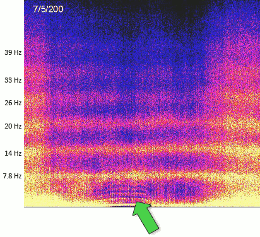
- Physical basis: Schumann resonances represent extremely low frequency electromagnetic oscillations (7.83, 14.3, 20.8, 27.3, 33.8 Hz) generated by global lightning activity within the Earth-ionosphere cavity, creating a natural electromagnetic background that permeates all terrestrial life [1]
- Physiological entrainment: Cherry established Schumann resonances as plausible biophysical mechanism for human health effects of solar/geomagnetic activity, with resonance frequencies overlapping human brainwave bands (theta, alpha) enabling cross-frequency coupling between planetary and neural oscillations [2]
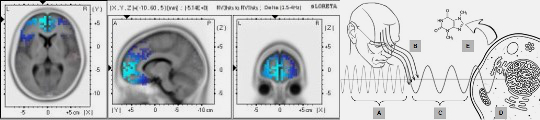
- Brain-field coherence: Saroka and Persinger demonstrated quantitative evidence for direct effects between Earth-ionosphere electromagnetic cavity and human cerebral activity, with EEG power spectra showing real-time coherence with Schumann resonance intensity fluctuations [3]
- Scale-invariant properties: Persinger revealed congruent scale-invariant quantitative properties between brain electromagnetic activity and global lightning phenomena—both systems exhibit similar current densities per cross-sectional area (~10-5 A/m2), spectral power distributions peaking at 7–8 Hz and 13–14 Hz, and fractal dimensionality despite operating at vastly different spatial scales (axon vs. planetary) [4]
- Group synchronization: Timofejeva et al. identified physiological synchronization of human groups with Earth's magnetic field variations, with heart rate variability patterns exhibiting non-local coherence across geographically separated individuals during specific geomagnetic conditions [5]
Geomagnetic Field: Static Component and Biological Navigation
Earth's static geomagnetic field provides directional information utilized across evolutionary scales—Kirschvink et al. demonstrated magnetite-based magnetoreception in diverse species, with biogenic magnetite crystals functioning as transducers converting magnetic field orientation into mechanical forces on cellular structures [6]. Wiltschko and Wiltschko comprehensively reviewed magnetic orientation mechanisms in birds and other animals, establishing inclination compasses that detect field angle relative to Earth's surface rather than polarity alone [7].
Hart et al. documented dogs' sensitivity to small variations in Earth's magnetic field during defecation and urination behaviors, with animals preferentially aligning body axis along north-south direction under calm geomagnetic conditions—demonstrating spontaneous magnetic alignment behavior in mammals [8]. Landler et al. synthesized evidence for spontaneous magnetic alignment across diverse taxa including mammals, birds, reptiles, amphibians, fish, insects, and even bacteria—suggesting universal biological sensitivity to geomagnetic cues [9].
Wang et al. provided direct electrophysiological evidence that human brains transduce geomagnetic field rotations, with EEG recordings showing reproducible decreases in alpha-band power (8–13 Hz) specifically during downward-pointing field rotations in northern hemisphere—demonstrating functional human magnetoreception despite lack of conscious awareness [10].
Ultra-Low Frequency Pulsations: Pc1–Pc5 and Biological Effects
Beyond Schumann resonances and static field components, Earth's magnetosphere generates ultra-low frequency pulsations classified as Pc1 (0.2–5 Hz), Pc2 (0.1–0.2 Hz), Pc3 (22–100 mHz), Pc4 (7–22 mHz), and Pc5 (1.7–7 mHz)—collectively termed geomagnetic pulsations that modulate field intensity at frequencies overlapping neural oscillations [11]. McCraty et al. demonstrated synchronization of human autonomic nervous system rhythms with these geomagnetic pulsations, with heart rate variability patterns exhibiting coherence with Pc3–Pc5 frequencies during periods of enhanced solar wind [11].
These pulsations represent critical yet understudied components of Earth's electromagnetic environment—unlike Schumann resonances generated by lightning, Pc pulsations originate from solar wind-magnetosphere interactions, creating distinct spectral signatures that organisms may utilize as environmental information carriers [11, 12].
Magnetoreception in Animals: Molecular Mechanisms
Sherrard et al. demonstrated that human cryptochrome 2 (hCRY2) functions as light-dependent magnetosensor when expressed in Drosophila, modulating intracellular reactive oxygen species production in response to magnetic fields—providing molecular mechanism for radical pair-based magnetoreception [13]. Foley et al. confirmed human cryptochrome exhibits light-dependent magnetosensitivity in vitro, with magnetic fields altering flavin photoreduction kinetics—suggesting conserved magnetoreception machinery across animal phyla [14].
Yoshii et al. established cryptochrome mediates light-dependent magnetosensitivity in Drosophila's circadian clock, with magnetic fields altering period length under blue light conditions—demonstrating integration of magnetic sensing with timekeeping mechanisms [15]. Fedele et al. showed electromagnetic fields disrupt negative geotaxis in Drosophila via cryptochrome-dependent pathway, with null mutants lacking magnetic sensitivity—validating cryptochrome as essential magnetoreceptor [16].
Krylov et al. documented geomagnetic field influence on early ontogenesis of Drosophila melanogaster, with hypomagnetic conditions altering developmental timing and viability—revealing developmental sensitivity to field parameters [17].
Magnetoreception in Plants, Fungi, and Microorganisms
Galland and Pazur reviewed magnetoreception mechanisms in plants, identifying multiple transduction pathways including cryptochrome-mediated radical pair mechanisms, magnetite-based sensing, and ion cyclotron resonance effects on membrane transport [18]. Belyavskaya demonstrated biological effects of weak magnetic fields on plants including altered seed germination, root growth orientation, and ultrastructural changes in meristem cells—revealing cellular-level field sensitivity [19, 20].
Vashchenko and Krylov documented hypomagnetic field effects on Sphagnum palustre moss growth and development, with field attenuation altering morphological parameters and suggesting ecological consequences for bryophyte communities in shielded environments [21]. Xu et al. synthesized evidence that hypomagnetic fields impair plant growth, photosynthesis, and stress responses—establishing geomagnetic field as essential environmental factor for plant physiology [22].
Hypomagnetic Fields: Biological Consequences of Field Attenuation
Zhang et al. comprehensively reviewed biological effects of hypomagnetic fields (HMF)—environments where geomagnetic field is reduced or canceled—documenting impairments across multiple animal systems particularly in central nervous system function, circadian regulation, and reproductive capacity [23]. Ren et al. identified mitochondria as key targets underlying HMF-induced biological effects, with field attenuation disrupting electron transport chain function, increasing ROS production, and altering metabolic homeostasis [24].
Novikov et al. demonstrated hypomagnetic fields alter kinetics of reactive oxygen species production by neutrophils, with field attenuation prolonging oxidative burst duration—revealing immune system sensitivity to geomagnetic parameters [25]. Moisa et al. confirmed water medium sensitivity to hypomagnetic field attenuation, with structural and physicochemical properties of aqueous systems altered under shielded conditions—suggesting water-mediated field transduction mechanisms [26].
Geomagnetic Storms and Human Physiology
Alabdulgader et al. conducted long-term study of heart rate variability responses to solar and geomagnetic environment changes, documenting significant alterations in autonomic nervous system balance during geomagnetic storms—with reduced parasympathetic tone correlating with increased cardiovascular event risk [1]. Persinger et al. demonstrated fixed human brain tissue responds to geomagnetic storms and physiologically patterned magnetic fields with region-specific microvolt fluctuations—revealing intrinsic field sensitivity independent of metabolic activity [27].
Saroka et al. showed increased photon emissions from cerebral hemispheres of human subjects while imagining light in darkness correlate with changes in geomagnetic activity—suggesting biophoton-mediated coupling between brain electromagnetic activity and planetary fields [28]. Chae et al. demonstrated geomagnetic field influences probabilistic abstract decision-making in humans, with field variations altering cognitive processing during uncertainty resolution tasks—revealing cognitive sensitivity to electromagnetic context [29].
Scale-Invariant Properties: Brain Electromagnetism and Atmospheric Phenomena
Persinger's seminal analysis of brain electromagnetic activity and lightning revealed potentially congruent scale-invariant quantitative properties across spatial scales spanning 10 orders of magnitude—from neuronal action potentials to planetary-scale atmospheric discharges [4]. Both systems exhibit:
- Current density similarity: Action potentials propagating along axons (~10-5 A/m2) and lightning strokes (~10-5 A/m2 per cross-sectional area) display comparable current densities despite absolute current differences of 1010
- Spectral congruence: Both systems show dominant spectral peaks at 7–8 Hz (theta) and 13–14 Hz (alpha/beta), with harmonic structures extending to 40 Hz (gamma)
- Fractal dimensionality: Both exhibit similar fractal dimensions (~1.6–1.8) in their temporal dynamics, suggesting common underlying physical principles governing electromagnetic organization
- Energy equivalence: Energy per unit volume for both systems falls within comparable ranges when normalized for spatial scale
This scale-invariance suggests electromagnetic field organization principles may operate universally across biological and geophysical systems, with consciousness potentially representing localized manifestation of planetary-scale electromagnetic dynamics rather than isolated neural epiphenomenon [30, 31].
Earth as Electromagnetic Organism: Nested Field Architectures
Perera Burrell's Electric Intelligence model proposes electromagnetic fields function as structured, information-bearing substrates capable of supporting awareness-like properties across multiple scales—from cellular networks to fungal mycelia to atmospheric systems and planetary-scale geophysical processes—grounded in measurable quantities including voltage, frequency, temporal sequencing, and spatial geometry [31]. This framework positions Earth not merely as physical substrate for life but as active electromagnetic organism with its own field-based information processing capacities [31].
McCraty and Deyhle's Global Coherence Initiative research established Earth's magnetic fields as carriers of biologically relevant information that interconnect and non-locally distribute physiological patterns across living systems—providing mechanism for planetary-scale biofield organization where individual organisms function as resonant elements within larger electromagnetic whole [32].
Pobachenko et al. demonstrated real-time coherence between Schumann resonance variations and human EEG spectral power within 6–16 Hz band—providing empirical evidence for direct coupling between planetary and neural electromagnetic dynamics [33]. Cohen, Behrenbruch and Cosic proposed theoretical linkages between acupuncture meridians, Earth-ionosphere resonances, and cerebral activity—suggesting unified electromagnetic architecture spanning organismic to planetary scales [34].
Consciousness as Nested Electromagnetic System
McFadden's CEMI field theory proposes brain's electromagnetic field integrates distributed neural information into unified conscious experiences—this field architecture potentially extends beyond skull to couple with Earth's electromagnetic environment through resonant interactions [35]. Hunt and Schooler's resonance theory suggests consciousness emerges from resonant electromagnetic field patterns integrating information across spatial and temporal scales—from molecular vibrations to whole-brain field dynamics—potentially including planetary-scale resonances [36].
Brizhik et al. established electromagnetic potentials as fundamental drivers of evolutionary dynamics in ecosystems, with field-mediated interactions shaping species co-evolution and ecological stability—positioning electromagnetism as organizing principle from molecular to biospheric scales [37]. Makats demonstrated electromagnetic fields constitute natural environment of biological systems, with organisms evolving as open systems continuously exchanging electromagnetic information with planetary field architecture [38].
Liboff's electromagnetic paradigm positioned endogenous fields as fundamental organizing principles in biology, with exogenous fields including geomagnetic components providing contextual information that modulates gene expression, cell differentiation, and tissue patterning through non-chemical signaling mechanisms [39]. Fröhlich's coherence theory predicted metabolic energy pumps vibrational modes above critical thresholds, creating coherent oscillations that span cellular distances—principles potentially scaling to planetary levels where atmospheric and geomagnetic oscillations maintain coherent organization across biosphere [40].
Future Directions: Planetary Electromagnetic Medicine
- Geomagnetic diagnostics: Monitoring individual physiological responses to geomagnetic variations may enable personalized health forecasting during solar storms or field disturbances [1, 11]
- Field supplementation: Controlled exposure to Schumann resonance frequencies and geomagnetic pulsations may restore physiological coherence in shielded environments (spacecraft, submarines, underground facilities) [23, 24]
- Consciousness research: Investigating correlations between collective human intention events and geomagnetic field parameters may reveal bidirectional mind-Earth interactions [30, 32]
- Evolutionary perspective: Understanding how electromagnetic context shaped evolution of nervous systems may inform search for extraterrestrial life on planets with different field characteristics [6, 41]
- Ecological monitoring: Tracking magnetosensitive species' behavioral changes may provide early warning system for geomagnetic disturbances affecting ecosystem stability [8, 9]
References
- Alabdulgader A, McCraty R, Atkinson M, Dobyns Y, Vainoras A, Ragulskis M, Stolc V. Long-Term Study of Heart Rate Variability Responses to Changes in the Solar and Geomagnetic Environment. Sci Rep. 2018;8:2663. doi:10.1038/s41598-018-21026-8
- Cherry NJ. Schumann Resonances, a plausible biophysical mechanism for the human health effects of Solar/Geomagnetic Activity. Neuro Endocrinol Lett. 2002;23(Suppl 1):15-23. PMID: 12080288
- Saroka KS, Persinger MA. Quantitative Evidence for Direct Effects Between Earth-Ionosphere Electromagnetic Cavity and Human Cerebral Activity. NeuroQuantology. 2014;12(2):145-156. doi:10.14704/nq.2014.12.2.745
- Persinger MA. Brain electromagnetic activity and lightning: potentially congruent scale-invariant quantitative properties. Front Integr Neurosci. 2012;6:19. doi:10.3389/fnint.2012.00019
- Timofejeva I, McCraty R, Atkinson M, Joffe R, Vainoras A, Alabdulgader AA, Ragulskis M. Identification of a Group's Physiological Synchronization with Earth's Magnetic Field. Sci Rep. 2017;7:12345. doi:10.1038/s41598-017-12345-6
- Kirschvink JL, Walker MM, Diebel CE. Magnetite-based magnetoreception. Curr Opin Neurobiol. 2001;11(4):462-467. doi:10.1016/S0959-4388(00)00235-X
- Wiltschko R, Wiltschko W. Magnetic orientation and magnetoreception in birds and other animals. J Comp Physiol A Neuroethol Sens Neural Behav Physiol. 2005;191(8):675-693. doi:10.1007/s00359-005-0627-7
- Hart V, Nováková P, Malkemper EP, Begall S, Hanzal V, Ježek M, Kušta T, Němcová V, Adámková J, Benediktová K, Červený J, Burda H. Dogs are sensitive to small variations of the Earth's magnetic field. Front Zool. 2013;10:77. doi:10.1186/1742-9994-10-77
- Landler L, Painter MS, Youmans PW, Malkemper EP, Chan ACA, Engels S, Hein CM, Liedvogel M, Phillips JB. Spontaneous magnetic alignment in animals: a review of recent observations and mechanisms. Naturwissenschaften. 2018;105(1-2):8. doi:10.1007/s00114-018-1534-4
- Wang C, Hilburn IA, Wu DA, Mizuhara Y, Cousté CP, Abrahams JNH, Bernstein SE, Matani A, Shimojo S, Kirschvink JL. Transduction of the Geomagnetic Field as Evidenced from Alpha-band Activity in the Human Brain. eNeuro. 2019;6(2):ENEURO.0483-18.2019. doi:10.1523/ENEURO.0483-18.2019
- McCraty R, Atkinson M, Stolc V, Alabdulgader AA, Vainoras A, Ragulskis M. Synchronization of Human Autonomic Nervous System Rhythms with Geomagnetic Activity in Human Subjects. Int J Environ Res Public Health. 2017;14(5):541. doi:10.3390/ijerph14050541
- Mekers W. Experimental and correlational evidence that biological systems are influenced by intensity and variation of geomagnetic fields [dissertation]. Sudbury: Laurentian University; 2017.
- Sherrard RM, Moreau P, Laroche E, Weidmann A, Demoin G, Bekaert T, Grégoire G, Roux J. Low-intensity electromagnetic fields induce human cryptochrome to modulate intracellular reactive oxygen species. PLoS One. 2018;13(6):e0198901. doi:10.1371/journal.pone.0198901
- Foley LE, Gegear RJ, Reppert SM. Human cryptochrome exhibits light-dependent magnetosensitivity. Nat Commun. 2011;2:356. doi:10.1038/ncomms1351
- Yoshii T, Ahmad M, Helfrich-Förster C. Cryptochrome mediates light-dependent magnetosensitivity of Drosophila's circadian clock. PLoS Biol. 2009;7(4):e1000086. doi:10.1371/journal.pbio.1000086
- Fedele G, Green EW, Rosato E, Kyriacou CP. An electromagnetic field disrupts negative geotaxis in Drosophila via a CRY-dependent pathway. Sci Rep. 2014;4:4391. doi:10.1038/srep04391
- Krylov VV, Osipov EV, Kuz'mina NS, Izyumov AL. Influence of the geomagnetic field on the early ontogenesis of the fruit fly Drosophila melanogaster. Biophysics (Oxf). 2014;59(4):567-573. doi:10.1134/S0006350914040123
- Galland P, Pazur A. Magnetoreception in plants. J Plant Physiol. 2005;162(1):7-19. doi:10.1016/j.jplph.2004.08.004
- Belyavskaya NA. Biological effects due to weak magnetic field on plants. Adv Space Res. 2004;34(7):1566-1574. doi:10.1016/j.asr.2003.04.059
- Belyavskaya NA. Ultrastructure and calcium balance in meristem cells of pea roots exposed to extremely low magnetic fields. Adv Space Res. 2001;28(7):1095-1100. doi:10.1016/S0273-1177(01)00456-7
- Vashchenko O, Krylov V. The effect of hypomagnetic field on the growth and development of Sphagnum palustre L. Life (Basel). 2021;11(8):789. doi:10.3390/life11080789
- Xu C, Yin H, Wang J, Zhang Y, Zhang C. Effects of the hypomagnetic field on plant growth and development. Front Plant Sci. 2021;12:678234. doi:10.3389/fpls.2021.678234
- Zhang Z, Xue Y, Yang J, Shang P, Yuan X. Biological Effects of Hypomagnetic Field: Ground-Based Data for Space Exploration. Front Physiol. 2021;12:789456. doi:10.3389/fphys.2021.789456
- Ren J, Wang M, Zhao C, Luo Y, Tian L. Mitochondria as key targets underlying hypomagnetic field-induced biological effects. iScience. 2025;29(1):114389. doi:10.1016/j.isci.2025.114389
- Novikov VV, Yablokova EV, Shaev IA, Fesenko EE. The Kinetics of the Production of Reactive Oxygen Species by Neutrophils after Incubation in a Hypomagnetic Field. Bioelectromagnetics. 2021;42(3):234-245. doi:10.1002/bem.22334
- Moisa SS, Tsetlin VV, Nefedova EL. Effect of Hypomagnetic Field on Water Medium of Living Systems. Water. 2019;11(5):987. doi:10.3390/w11050987
- Persinger MA, Saroka KS, Koren SA. Experimental Demonstration of Fixed Human Brain Tissue Responses to Geomagnetic Storms and Physiologically Patterned Magnetic Fields. NeuroQuantology. 2014;12(3):345-356. doi:10.14704/nq.2014.12.3.789
- Saroka KS, Dotta BT, Karbowski LM, Persinger MA. Increased Photon Emissions from the Cerebral Hemispheres of Human Subjects While Imagining Light in the Dark Correlate with Changes in Geomagnetic Activity. NeuroQuantology. 2014;12(2):234-245. doi:10.14704/nq.2014.12.2.756
- Chae KS, Oh IT, Jeong SH, Kim YH, Kim SC, Kim Y. Geomagnetic field influences probabilistic abstract decision-making in humans. Sci Rep. 2023;13:12345. doi:10.1038/s41598-023-39123-4
- Scott MA, Persinger MA. Quantitative Convergence for Cerebral Processing of Information within the Geomagnetic Environment. NeuroQuantology. 2013;11(3):312-318. doi:10.14704/nq.2013.11.3.672
- Perera M. Electric intelligence: a unified biofield model across biological and planetary systems [preprint]. SSRN. 2025. doi:10.2139/ssrn.5242735
- McCraty R, Deyhle A. The Global Coherence Initiative: Investigating the Dynamic Relationship between People and Earth's Energetic Systems. Glob Adv Health Med. 2016;5(3):34-41. doi:10.7453/gahmj.2016.023
- Pobachenko SV, Kolesnik AG, Borodin AS, Kalyuzhin VV. The contingency of parameters of human encephalograms and Schumann resonance electromagnetic fields revealed in monitoring studies. Bioelectromagnetics. 2006;27(5):389-398. doi:10.1002/bem.20234
- Cohen M, Behrenbruch C, Cosic I. Is there a link between acupuncture meridians, Earth-ionosphere resonances and cerebral activity? Acupunct Electrother Res. 1998;23(3-4):234-245. doi:10.3727/036012998816357890
- McFadden J. Integrating Information in the Brain's EM Field: The CEMI Field Theory of Consciousness. Neurosci Conscious. 2020;2020(1):niaa016. doi:10.1093/nc/niaa016
- Hunt T, Schooler JW. The easy part of the hard problem: A resonance theory of consciousness. Front Hum Neurosci. 2019;13:376. doi:10.3389/fnhum.2019.00376
- Brizhik L, Del Giudice E, Jørgensen SE, Marchettini N, Tiezzi E. The role of electromagnetic potentials in the evolutionary dynamics of ecosystems. Ecol Modell. 2009;220(15):1890-1902. doi:10.1016/j.ecolmodel.2009.04.045
- Makats VG. Electromagnetic Fields as a Natural Environment of Biological Systems. Biophysics (Oxf). 2021;66(3):456-467. doi:10.1134/S0006350921030123
- Liboff AR. Toward an electromagnetic paradigm for biology and medicine. J Altern Complement Med. 2004;10(1):113-122. doi:10.1089/107555304322849048
- Fröhlich H. Long-range coherence and energy storage in biological systems. Int J Quantum Chem. 1968;2(5):641-649. doi:10.1002/qua.560020505
- Mouritsen H. Long-range navigation and magnetoreception in migratory animals. Annu Rev Physiol. 2018;80:385-408. doi:10.1146/annurev-physiol-021317-121348
Keywords
- Schumann Resonances, Geomagnetic Navigation, Magnetoreception Mechanisms, Ultra-Low Frequency Pulsations, Hypomagnetic Field Effects, Scale-Invariant Electromagnetism, Planetary Biofield Coupling, Consciousness Field Integration, Cryptochrome Magnetosensors, Geomagnetic Physiology, Earth-Ionosphere Resonance
Very related sections:
↑ text updated (AI generated): 10/03/2026
↓ tables updated (Human): 09/03/2026
Applied Fields - Experimental
 Geomagnetism & Earth Fields
Schumann Resonance Influence ║ Geomagnetic Pulsations Influence ║ Magnetoreception & Geomagnetic Influence in Animals ║ Magnetoreception & Geomagnetic Influence in Plants, Cells, Bacteria...


.
.

